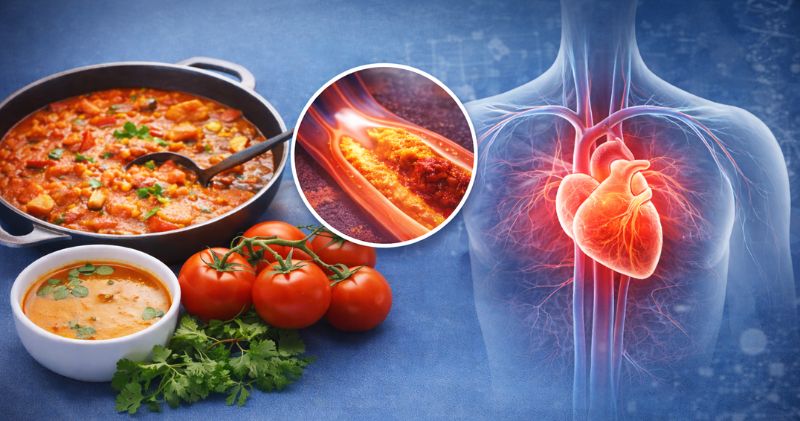
Picture this: tomato curry simmering on the stove. Rasam bubbling in a pot. Fresh chutney ready for dinner.
What if these everyday foods could help protect your heart?
Scientists have been studying a molecule in tomatoes called lycopene. And one well-designed study found something exciting — it may actually help shrink plaque in your arteries.
Let us walk you through what the science says.
What Is Lycopene?
Lycopene is simple to understand:
- It is what makes tomatoes red
- It is an antioxidant (fights damage in your body)
- Your body cannot make it — you must eat it
- Tomatoes are the best source
Think of lycopene like a tiny helper that cleans up waste in your blood vessels.
Why This Matters for South Asians
Here is the hard truth: South Asians have higher rates of heart disease. Plaque buildup in our arteries starts earlier — sometimes decades before symptoms appear.
We need every safe tool we can find.
The good news? Tomatoes are already in our food. Dal, curries, chutneys, biryani — we eat them regularly.
But does the science support eating more?
The Study You Should Know About
One study stands above the rest. Here is why it matters.[^1]
The details:
- Length: One full year (not weeks — a full 12 months)
- Design: Double-blind, placebo-controlled
- Double-blind means neither patients nor doctors knew who got real treatment
- Placebo-controlled means some people got fake pills for comparison
- Who: 144 people aged 45-68 who already had early plaque buildup
- Treatment: Supplements — 20 mg lycopene plus 20 mg lutein daily
- What they measured: Actual plaque thickness in arteries (not just cholesterol numbers)
The results:
- People taking placebo? No change
- People taking lutein alone? Plaque went down
- People taking lutein plus lycopene? Plaque went down even more
This was not a short experiment. They measured real plaque, not just blood tests. And the combination worked better than one ingredient alone.
More Evidence: Blood Levels and Plaque
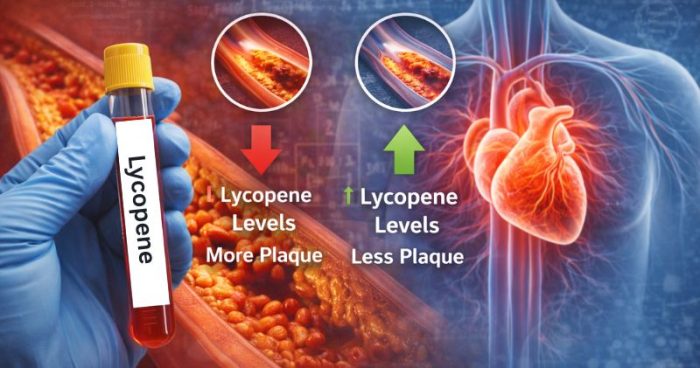
The study above is not alone. Several other studies looked at blood lycopene levels and artery health.
Finland: 520 middle-aged people were tested. Men with low lycopene had 18% more plaque thickness.[^2]
Italy: Researchers found a strong pattern — higher lycopene meant less plaque. This held true even after accounting for cholesterol.[^3]
Spain: In 105 newly diagnosed diabetics, those with more plaque had less lycopene in their blood.[^4]
Another Italian study: 120 people were compared. Those with visible plaque had significantly lower lycopene levels.[^5]
The pattern is clear: more lycopene in blood = healthier arteries.
These are observational studies — they show patterns, not proof. But combined with the year-long trial above, the picture becomes stronger.
What About the Study That Found No Effect?
You may read about a 2012 UK study that found no benefit.[^6] Scientists give it less weight because: it lasted only 12 weeks (not enough time), used healthy people (no disease to improve), did not measure actual plaque (only blood tests), and used a lower dose (10 mg vs 20 mg plus lutein).
This study asked the wrong question, in the wrong people, for too short a time.
One More Finding: Whole Tomatoes May Matter
A large study followed almost 40,000 women for years.[^7]
Lycopene intake alone showed no clear connection to heart disease. But women eating 7 or more servings of tomato foods per week had about 30% lower heart disease risk.
The lesson? Whole tomatoes may work better than lycopene alone. The whole package — not just one molecule — may matter.
How Much Do You Need?
The successful study used 20 mg lycopene per day plus lutein.
Here is how to get 20 mg from food:
Food | Amount Needed |
Tomato paste | 2 tablespoons |
Tomato sauce | ½ cup |
Cooked tomatoes | 1½ cups |
Raw tomatoes | 4-5 medium |
Important tips:
- Cooking tomatoes increases absorption
- Adding oil helps your body use lycopene
- Good news: this is already how we cook
What about lutein? The successful study combined lycopene with lutein. You can get lutein from palak (spinach), methi, and eggs.
Our Honest Recommendation
The evidence is promising. One good trial showed real plaque reduction over one year. Multiple studies show consistent patterns.
But we are not at “proven beyond doubt” yet.
What makes sense now:
For most people:
- Add more cooked tomatoes to your diet
- It is safe, cheap, and fits our cuisine
- Combine with leafy greens for lutein
- Think of this as one tool — not a magic cure
For people with early plaque or high risk:
- Talk to your doctor about lycopene plus lutein supplements
- The studied dose: 20 mg each, daily, for at least one year
- Do NOT stop any medications
For everyone:
- Know your risk first — take the free SACRA assessment on our website
- This does not replace statins, blood pressure medicine, exercise, or healthy weight
Easy Ways to Add Tomatoes
- Add 2 tablespoons tomato paste to dal
- Make fresh tomato chutney weekly
- Add extra tomatoes to curry gravies
- Drink tomato rasam as soup
- Roast tomatoes with a little oil as a side dish
For lutein, add palak dishes, methi, or eggs.
The Takeaway
One well-designed study showed lycopene plus lutein can reduce plaque over a year. Multiple studies confirm the pattern: higher blood lycopene means healthier arteries.
Tomatoes are safe, cheap, and already part of our food. This is not a cure. But combined with other smart choices, it may help.
The tomato curry your mother made was not just comfort food — science suggests it may have been protecting your heart all along.
References
- Zou ZY, et al. Effects of lutein and lycopene on carotid intima-media thickness in Chinese subjects with subclinical atherosclerosis: a randomised, double-blind, placebo-controlled trial. British Journal of Nutrition. 2014;111(3):474-480.
- Rissanen T, et al. Low plasma lycopene concentration is associated with increased intima-media thickness of the carotid artery wall. Arteriosclerosis, Thrombosis, and Vascular Biology. 2000;20(12):2677-2681.
- Gianetti J, et al. Inverse association between carotid intima-media thickness and the antioxidant lycopene in atherosclerosis. American Heart Journal. 2002;143(3):467-474.
- Chiva-Blanch G, et al. 5-cis-, trans- and total lycopene plasma concentrations inversely relate to atherosclerotic plaque burden in newly diagnosed type 2 diabetes subjects. Nutrients. 2020;12(6):1696.
- Riccioni G, et al. Lycopene and preclinical carotid atherosclerosis. Journal of Biological Regulators and Homeostatic Agents. 2011;25(3):435-441.
- Thies F, et al. Effect of a tomato-rich diet on markers of cardiovascular disease risk in moderately overweight, disease-free, middle-aged adults: a randomized controlled trial. American Journal of Clinical Nutrition. 2012;95(5):1013-1022.
- Sesso HD, et al. Dietary lycopene, tomato-based food products and cardiovascular disease in women. Journal of Nutrition. 2003;133(7):2336-2341.