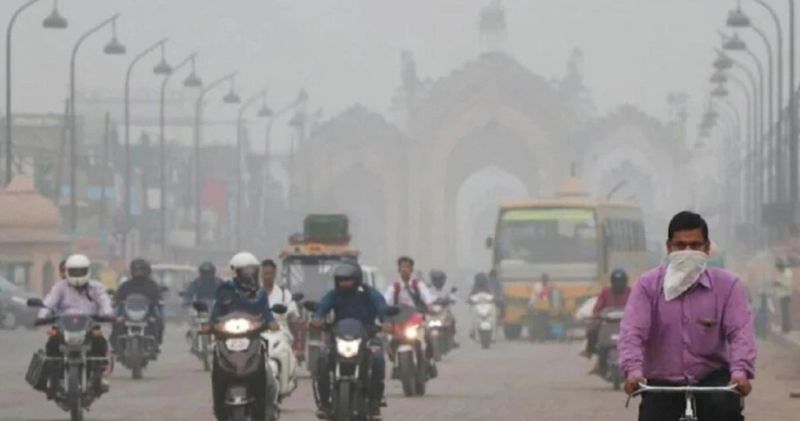
If you breathe dirty air today, your heart could fail tomorrow. Here’s what every South Asian needs to know.
The 24-Hour Countdown
Imagine this: You wake up in Delhi on a winter morning. The sky looks gray and hazy. You check your phone—the Air Quality Index (AQI) reads 350. “Severe” pollution, but you’ve seen worse.
You go about your day. Work, errands, maybe a walk outside. You breathe thousands of times without thinking about it.
Twenty-four hours later, hospitals across Delhi see a spike in heart attacks. Emergency rooms fill with people clutching their chests. Stroke victims arrive by ambulance. Heart failure patients struggle to breathe.
This isn’t coincidence. It’s cause and effect.
A new study tracking over 15,000 cardiovascular emergencies in Delhi and Shimla has proven what doctors suspected: bad air days create heart attack days. Not years later—just one day later.
The Numbers Don't Lie
Here’s what researchers found in Delhi:
- Every 10-point jump in air pollution = 1.8% more heart emergencies the next day
- When PM2.5 goes up by 10 units = 2% more heart attacks within 24 hours
- A typical pollution spike of 100 points = 18% more people in emergency rooms
Think about what this means. In a city of 17 million people, that’s hundreds of extra heart attacks every time pollution spikes. Hundreds of families getting devastating phone calls. Hundreds of lives changed forever.
All because of invisible particles in the air.
What PM2.5 Does to Your Heart (And Why You Should Care)
PM2.5 stands for “particulate matter 2.5″—tiny particles smaller than a human hair. So small they go deep into your lungs and enter your bloodstream.
Once inside your body, these particles:
✗ Cause inflammation throughout your cardiovascular system
✗ Make your blood clot more easily
✗ Raise your blood pressure dangerously high
✗ Disrupt your heart rhythm
✗ Damage blood vessel walls
Your heart is like a pump that needs clean fuel. PM2.5 is like putting sand in that pump. Eventually, something breaks.
The World Health Organization says PM2.5 should stay below 5 micrograms per cubic meter.
Delhi regularly hits 100-300. Sometimes over 400.
That’s 20 to 80 times higher than safe levels.
Why South Asians Are Especially Vulnerable
This isn’t just a Delhi problem. It’s a South Asian crisis.
According to the 2023 World Air Quality Report, India ranked as the 3rd most polluted country in the world (https://www.iqair.com/world-air-quality-report). Pakistan and Bangladesh aren’t far behind.
But pollution is only part of the story. South Asians face a perfect storm of heart disease risk factors:
We Get Heart Disease Younger
The Delhi study found heart attack patients averaged just 56 years old. In Shimla, 59 years. Compare this to Western countries where the average is 65-70 years.
South Asians develop heart disease 10-15 years earlier than other populations.
We Have More Risk Factors
Look at what researchers found in Delhi patients:
- 87% were sedentary (barely any exercise)
- 58% ate salty foods daily
- 63% ate fried/fast food 3+ times per week
- 56% used tobacco
- 55% had high blood pressure
- 33% had diabetes
- 24% reported high stress
- 40% had depression symptoms
Every one of these makes you more vulnerable when pollution strikes.
Pollution Creates MORE Risk Factors
Here’s the scary part: pollution doesn’t just trigger heart attacks in people who already have risk factors. It creates the risk factors.
Recent research shows that breathing polluted air:
- Raises your blood pressure (https://www.ahajournals.org/doi/10.1161/HYPERTENSIONAHA.120.15866)
- Increases diabetes risk
- Causes metabolic disorders
- Accelerates hardening of arteries
So pollution makes you sick over time, then triggers the emergency that puts you in the hospital. Double danger.
The Hidden Killer: Indoor Air Pollution
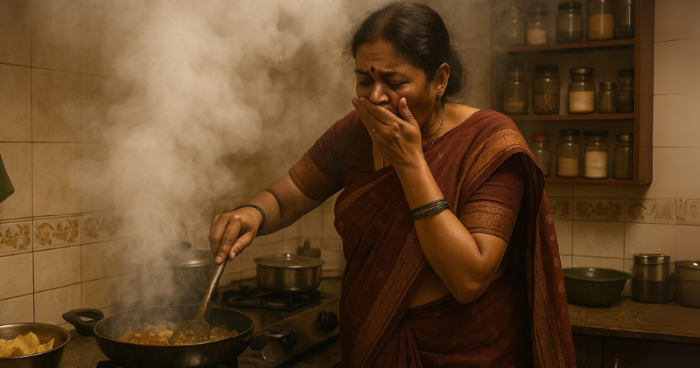
Think staying indoors protects you? Think again.
The study found something shocking: 67% of Shimla households still cook with solid fuels—wood, coal, crop waste, or kerosene.
Every time you cook with these fuels, you’re breathing pollution levels that can exceed outdoor levels. And you’re breathing it for hours, up close, in enclosed spaces.
Women who cook with solid fuels face the highest risk. They spend hours each day breathing toxic fumes that directly damage their hearts.
Even in Delhi, where 98% use gas or electric stoves, indoor pollution from incense, mosquito coils, and outdoor pollution seeping inside creates danger
What You Can Do Right Now
1. Check Air Quality Daily
Download an air quality app. Check the AQI every morning like you check the weather.
- 0-50 (Green): Safe
- 51-100 (Yellow): Moderate—sensitive people should be careful
- 101-200 (Orange): Unhealthy for sensitive groups
- 201-300 (Red): Unhealthy for everyone
- 301-400 (Purple): Very unhealthy
- 401-500 (Maroon): Hazardous
On days above 100, take precautions.
2. Wear a Real Mask
Not a cloth mask. Not a surgical mask. An N95 or N99 mask that fits properly.
The study found 83% of Delhi patients reported wearing masks daily, but we don’t know if they were wearing the right kind or wearing them correctly.
A proper N95 mask can filter out 95% of PM2.5 particles. That’s real protection for your heart.
3. Time Your Outdoor Activities
Pollution is usually worst in early morning and late evening. Mid-day is often better (though not always).
Check the AQI before morning walks. If it’s above 200, exercise indoors instead.
4. Create a Clean Room
You can’t control outdoor air, but you can control one room in your home:
- Use an air purifier with HEPA filter
- Keep windows closed on high-pollution days
- Make this your sleeping room
- Spend time here when pollution is severe
One clean room can reduce your exposure by 50% or more.
5. Switch Cooking Fuels NOW
If you still cook with wood, coal, or kerosene: this is your biggest health risk.
LPG (gas) or electric stoves aren’t just convenient. They’re lifesaving. Government programs like Ujjwala Yojana can help with costs.
If you must use solid fuels:
- Cook outdoors when possible
- Use improved cookstoves with chimneys
- Ensure good ventilation
- Limit time near the stove
6. Know Your Numbers
Get checked for:
- Blood pressure
- Blood sugar (diabetes screening)
- Cholesterol levels
- Body mass index (BMI)
If you have ANY risk factors, you’re more vulnerable to pollution’s effects.
Managing these conditions isn’t optional when you live in a polluted city—it’s survival.
7. Recognize Heart Attack Warning Signs
Pollution-triggered heart attacks happen fast. Know the signs:
- Chest pain or pressure (like an elephant sitting on your chest)
- Pain radiating to arm, jaw, or back
- Shortness of breath
- Sudden sweating
- Nausea or vomiting
- Feeling of doom
Women may have different symptoms: unusual fatigue, sleep problems, indigestion-like pain.
Call emergency services immediately. Don’t wait.
The Bigger Picture: Why This Matters
This study tracked seven months in 2021. Just seven months. And it found clear evidence that pollution kills hearts within 24 hours.
Air pollution reduces average Indian life expectancy by 5.2 years. In Delhi, it’s nearly 8 years (https://aqli.epic.uchicago.edu/).
That’s not abstract statistics. That’s your life. Your parents’ lives. Your children’s futures.
But here’s hope: The damage is preventable.
Every study shows that when pollution goes down, heart attacks go down. Not eventually—immediately.
During COVID lockdowns, when pollution dropped, so did cardiovascular emergencies.
What Needs to Happen
Individual protection is important, but it’s not enough. We need:
Better monitoring systems that track both pollution and heart emergencies together
Public warning systems that alert people on dangerous days
Hospital preparedness so emergency rooms can staff up when pollution spikes
Stronger pollution controls on vehicles, industries, and construction
Rapid transition from solid cooking fuels to clean alternatives
Regional cooperation because pollution crosses borders
Your Heart Can't Wait
Every breath matters. Every day of high pollution exposure damages your cardiovascular system.
You can’t see PM2.5. You can’t smell it. But it’s there, and it’s working against your heart right now.
The good news: You have more power than you think. Check the air quality. Wear a proper mask. Create a clean space. Switch your cooking fuel. Know your risk factors. Recognize warning signs.
Most importantly: Share this information. Your family needs to know. Your neighbors need to know. Your community needs to know.
Because somewhere in Delhi right now, someone is breathing polluted air. And 24 hours from now, they might be in an emergency room.
But it doesn’t have to be you. Or your loved ones.
Take action today. Your heart depends on it.
About SouthAsianHeart.com: We provide evidence-based cardiovascular health information specifically for South Asian communities. Follow us for more lifesaving information about protecting your heart in a changing climate.
Sources: This article is based on peer-reviewed research published in Discover Public Health (2025), with additional data from WHO, Lancet Planetary Health, and the Air Quality Life Index.
https://link.springer.com/article/10.1186/s12982-025-01299-7